
Cardiology medical billing built for procedure-heavy groups.
Cardiology claims die on NCCI edits, device coding, and LCD/NCD medical necessity. eBillRCM pairs cardiology-experienced coders with denial specialists who know cath, EP, echo, and stress workflows — so high-dollar procedures collect the first time.
Outcomes practices see
Coding accuracy
High-dollar denial turnaround
First-pass clean claims
Where cardiology billing breaks
- NCCI bundling on same-day procedures
- LCD/NCD medical-necessity denials
- Global period and modifier mistakes
What we focus on
- Diagnostic vs interventional coding
- Device and implant charge capture
- Prior auth for high-cost imaging/procedures
- Underpayment review against contracts
Cardiology is where a single claim can be worth thousands — and where payers look the hardest before they pay. When a billing team treats a cath, an ablation, or an echo like any other office visit, the result is predictable: six figures a year lost to "not medically necessary" and "this is bundled" denials. The difference isn't magic. It's people who actually speak cardiology reading the note before the claim ever goes out, so the high-dollar work gets paid the first time instead of six months later.

Cath lab and interventional work that survives the edits
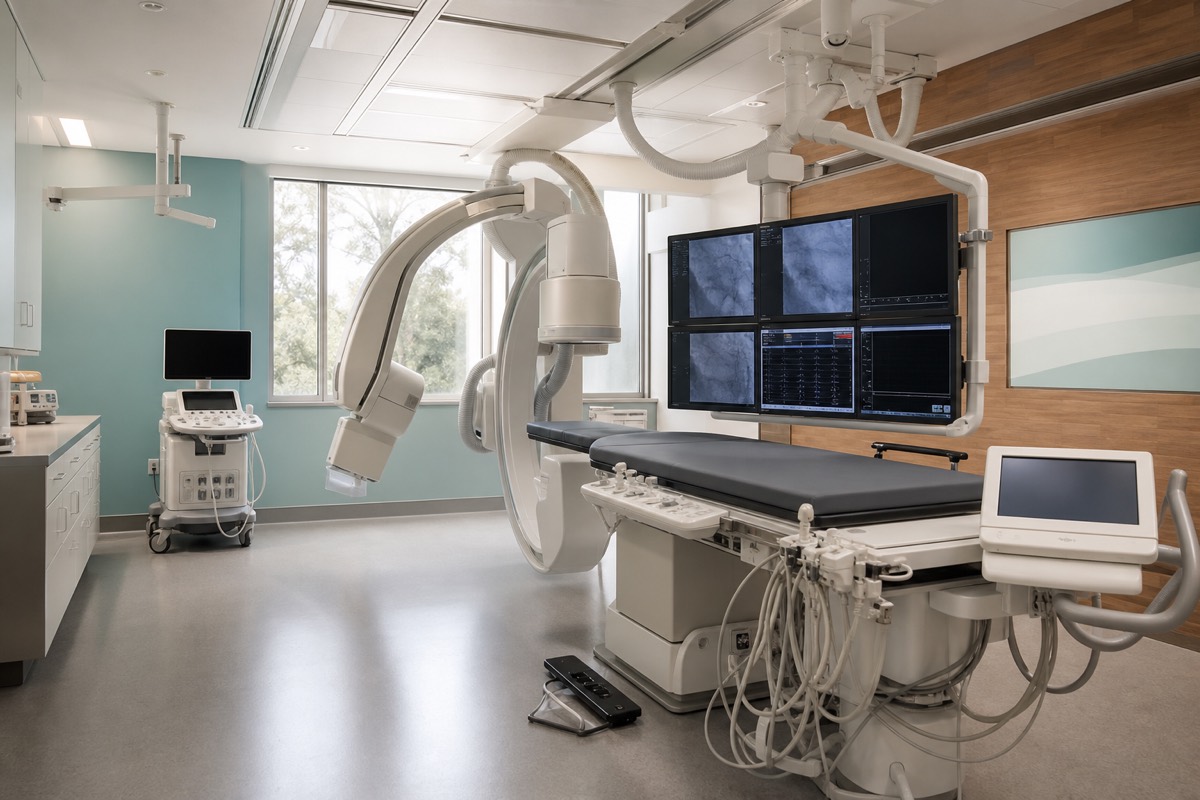
A left heart cath with coronary angiography usually lands on 93458; add bypass graft imaging and you move to 93459. Right-heart work, congenital cases, and interventions each shift the code family again. The trap is same-session billing: the payer's edits will automatically fold a diagnostic cath into the intervention unless the note clearly shows the diagnostic study actually changed the plan — and even then, the modifiers have to be right. We check those same-day cath and stent combinations against current edits before submission, because reaching for modifier 59 "because we've always done it that way" is exactly how groups end up handing money back.
EP, device checks, and the revenue hiding in "just a nurse visit"
SVT ablations often use 93653; a-fib pulmonary vein isolation typically uses 93656, with add-ons when more is treated. And then there are device checks. Pacemaker and defibrillator interrogations — the remote ones and the in-person ones — are genuine, billable services, but they get quietly written off all the time because the front desk logs them as a routine nurse visit. Over a year, that's a lot of real revenue evaporating for no reason other than how the visit got labeled.
- Bill the interpretation (modifier 26) when your physician reads the study but the facility owns the equipment.
- Bill the technical side (modifier TC) only when your practice actually owns that equipment and the contract allows it.
- Bill globally only when your group provides both halves in your own office setting.
- Never flip these on and off just to "get something paid" — where the service happened decides the choice.
Echo, stress tests, and winning the necessity fight
A full transthoracic echo with Doppler is typically 93306; a limited or follow-up study drops to 93307 or 93308. Stress echo and nuclear studies have their own rules and frequency limits. Here's the part that saves money: before appealing a "not medically necessary" denial, we pull up the payer's own coverage policy, match your patient's diagnosis to their list, and quote the exact policy section in the appeal. Letters that cite the policy by number win back roughly 70% of the time. Vague "the patient needed the test" letters win closer to one in five. Same denial, wildly different outcome.
The underpayments you can't see
Cardiology contracts are complicated enough that underpayments can hide for months inside routine-looking adjustments. If your contract says one rate and the payer quietly pays less, that's money you already earned. So every month we compare what payers actually allowed against what your contracts promise on your top procedure and device codes. A billing company that only watches the denial rate and ignores this gap is leaving your money on their table.
The last common trip-up is follow-up visits after a procedure. If a patient comes back during the global period for something unrelated, that visit needs to be flagged correctly or it just gets swallowed into the procedure fee. We train charge capture around these edges so your cath and EP volume posts clean on the first pass — the 97%+ target isn't marketing copy here, it's the number we hold your busiest weeks to.
Common questions
Do you handle hospital-based and office cardiology?
Yes. We bill professional and technical components correctly for the setting you operate in.
Related services
End-to-End Revenue Cycle Management
From eligibility to ERA — one team, one accountable partner.
Learn moreMedical Coding (ICD-10 / CPT / HCPCS)
AAPC-certified coders. Modifier-perfect. Audit-ready every day.
Learn moreDenial Management & Appeals
Every denial worked within 24 hours. No exceptions.
Learn more